A free ebook, as a PDF and an EPUB
The architect's handbook for resilient AI systems
Declare the budgets, wall off slow dependencies, fall over to a measured second provider, trace every turn, and change prompts and models without a rewrite.
The ebook is open in a new tab
If it did not open, open the PDF. For a reading app, download the EPUB. Both links work for a day; the form gives you new ones any time.
Build it live, with an engineer reviewing your choices
Design Production-Grade Agentic AI Systems. An architecture for one real workflow at your company that you can take to a design review: roles, models, context, tools, approvals, failure plan and budget.
Look insidePages from the PDF, as they print.
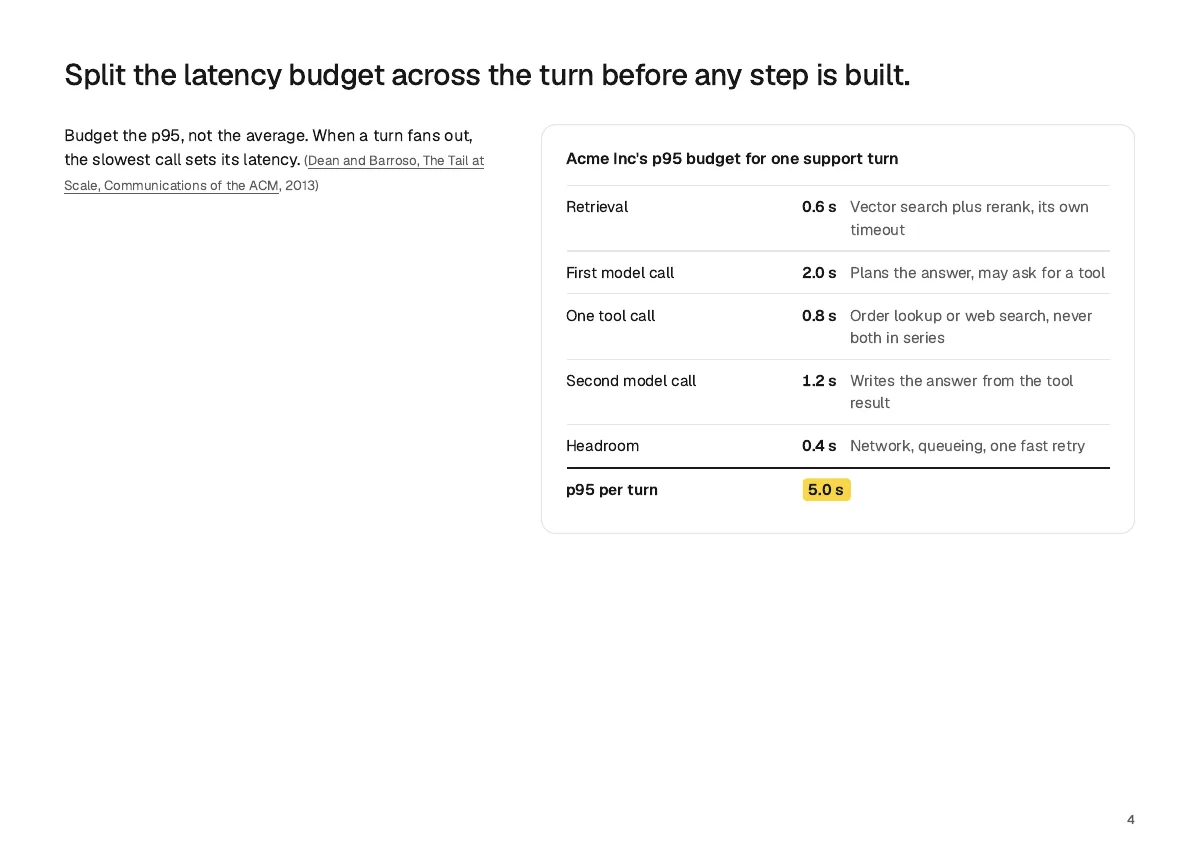
Page 4: Split the latency budget across the turn before any step is built. 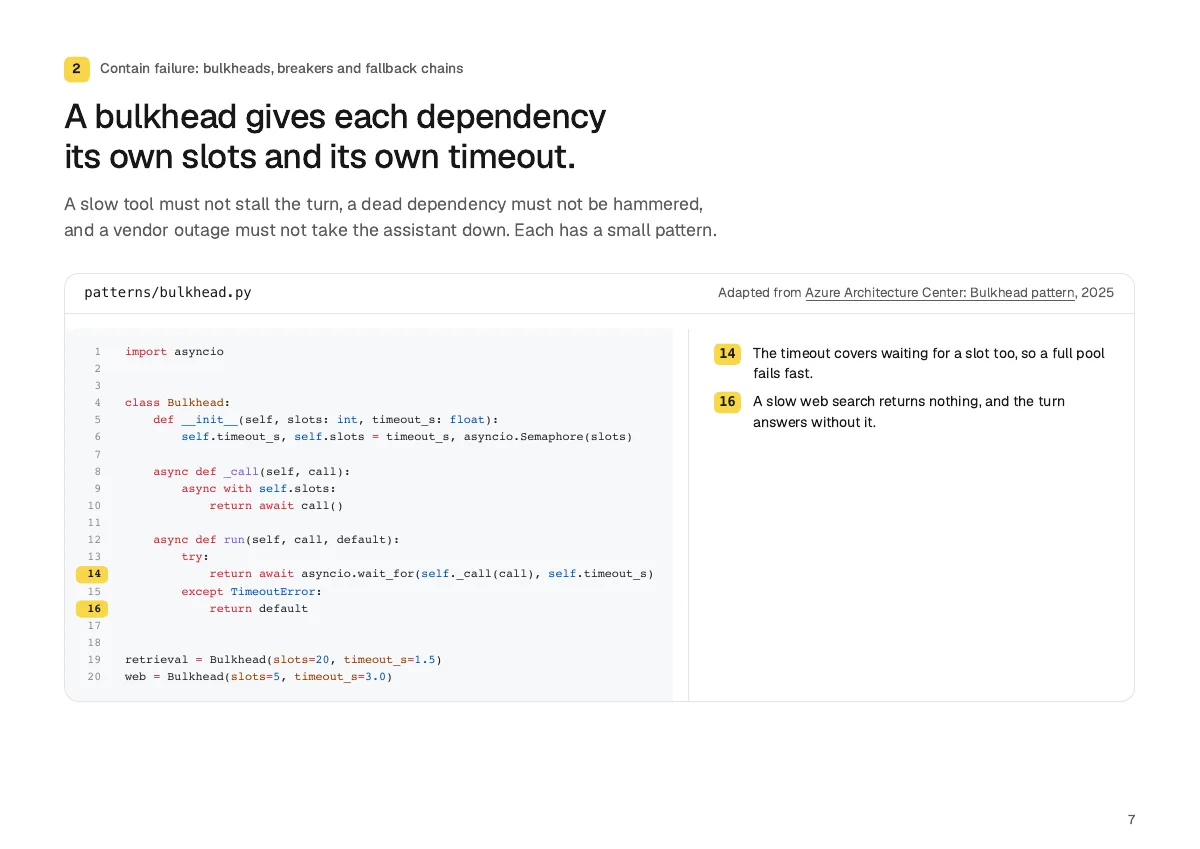
Page 7: A bulkhead gives each dependency its own slots and its own timeout. 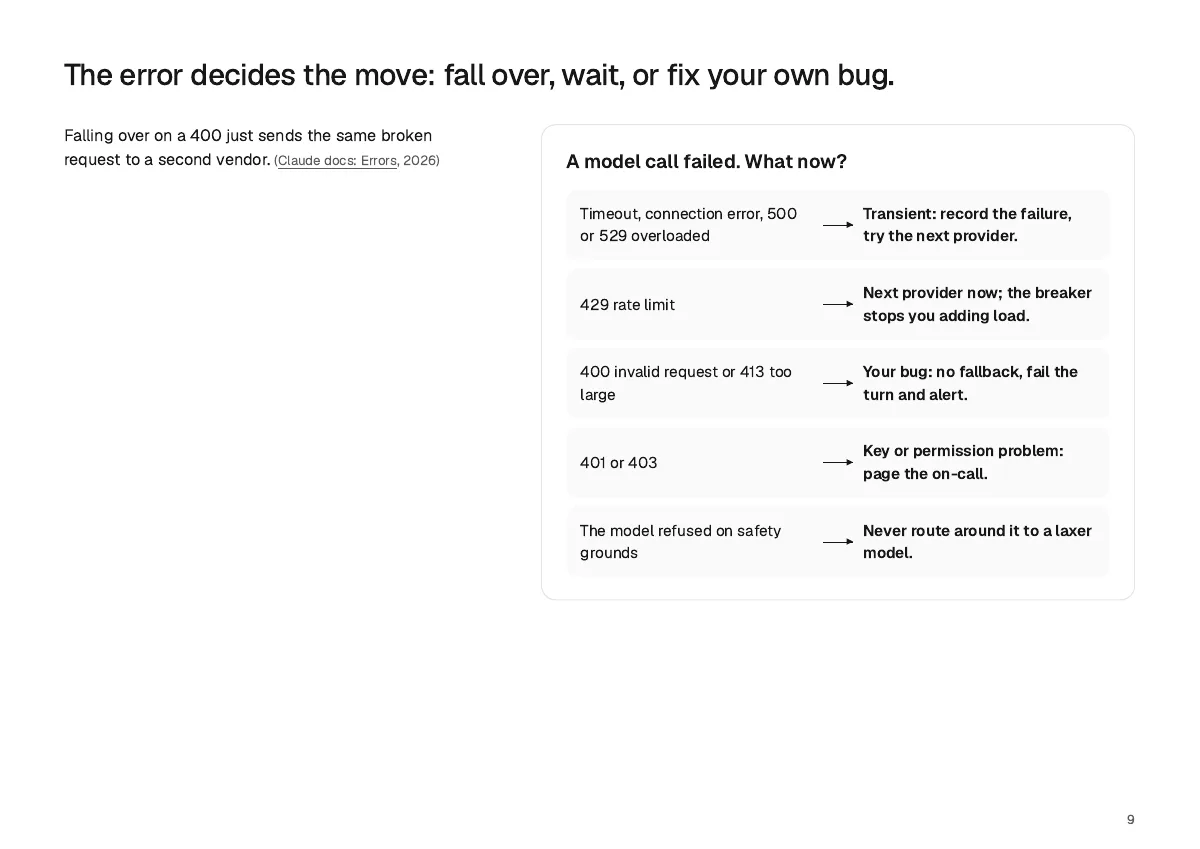
Page 9: The error decides the move: fall over, wait, or fix your own bug. 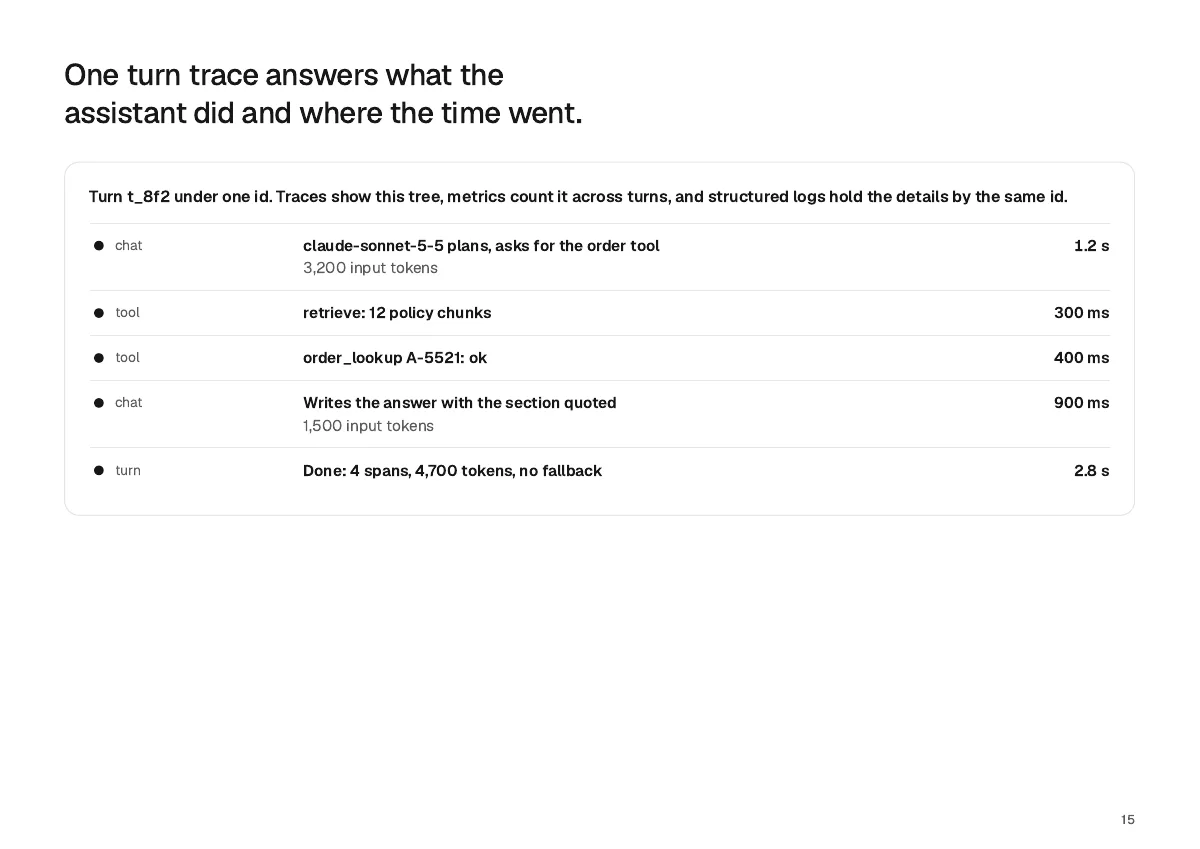
Page 15: One turn trace answers what the assistant did and where the time went. 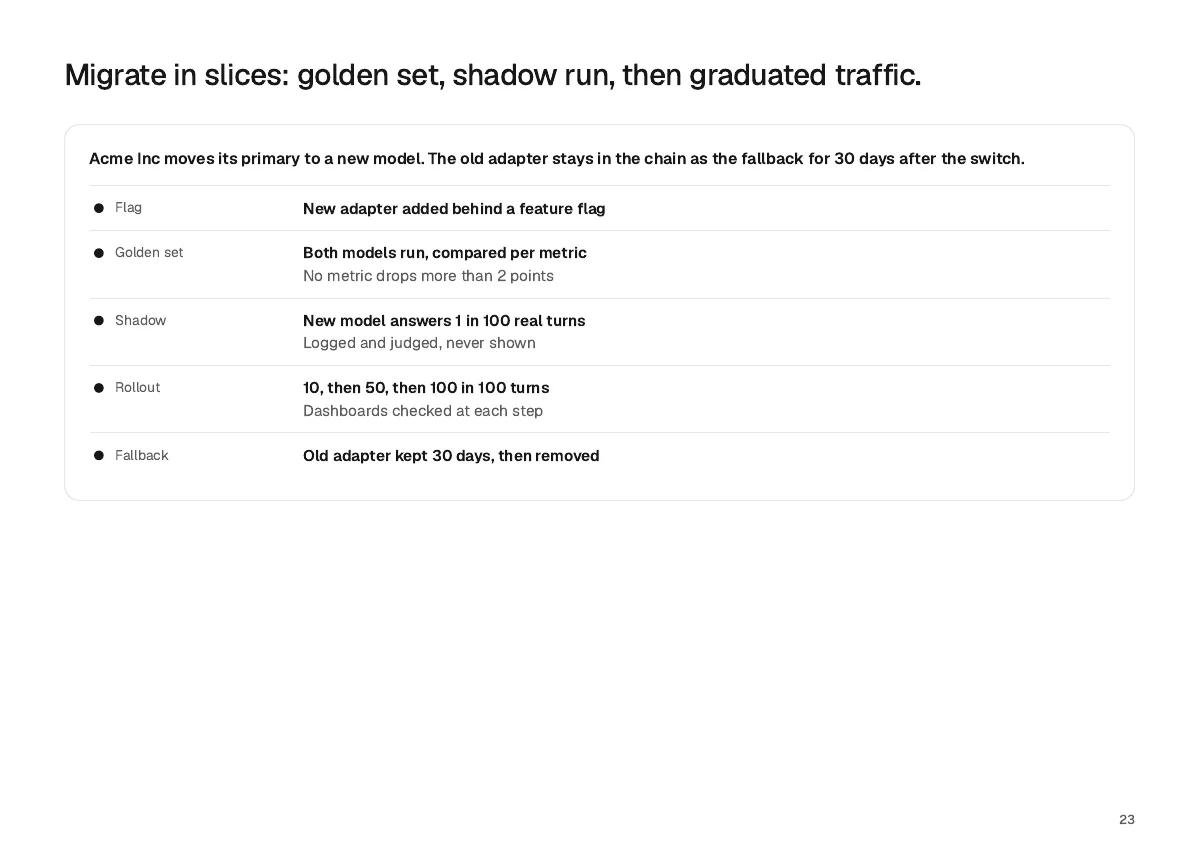
Page 23: Migrate in slices: golden set, shadow run, then graduated traffic. 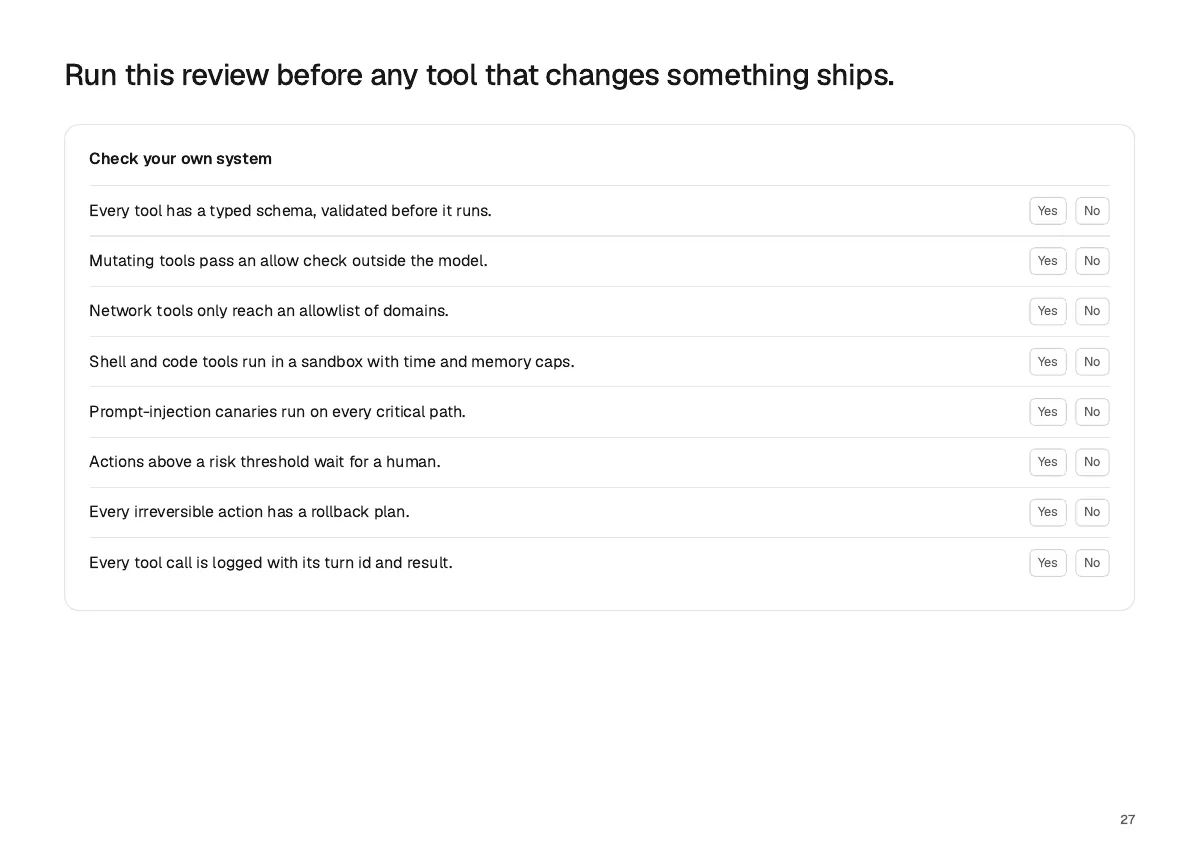
Page 27: Run this review before any tool that changes something ships.
What the ebook covers
- 1
Declare the four budgets before you write code
Latency, tokens, calls and errors each get a number in the design doc. Without them every feature adds a little, and the system is slow before anyone decided it should be.
- 2
Contain failure: bulkheads, breakers and fallback chains
A slow tool must not stall the turn, a dead dependency must not be hammered, and a vendor outage must not take the assistant down. Each has a small pattern.
- 3
Trace every turn, measure every tool
If you cannot say what the assistant did on one turn, you cannot debug it. Every turn gets an id, every model and tool call is a span, and five dashboards come first.
- 4
Treat prompts and context as infrastructure
A prompt is config with a schema, a version and a deploy pipeline. Every change runs the golden set, a drop blocks the merge, and rollback is moving a pointer.
- 5
Be ready to change the model without a rewrite
The model you launched on will be retired. Wrap every provider behind one adapter, compare on the golden set, shadow the new model on real traffic, and graduate it slice by slice.
- 6
Run the safety review before the assistant acts
Before an agent takes an action a person cannot cheaply undo, every tool is typed, mutating tools are gated, risky actions wait for a human, and every call is in the audit log.
- 7
The page to keep and the questions people ask
Every layer on one page, then short answers to what engineers search about resilient AI systems.