A free ebook, as a PDF and an EPUB
Production coding agents: a harness engineering guide
Build the harness around the model: a streaming loop, permission-checked tools, a shell with limits, context that survives long sessions, and evals that turn production ready into a number.
The ebook is open in a new tab
If it did not open, open the PDF. For a reading app, download the EPUB. Both links work for a day; the form gives you new ones any time.
Build it live, with an engineer reviewing your choices
Agentic AI System Design for Engineers & PMs. An architecture for one real workflow at your company that you can take to a design review: roles, models, context, tools, approvals, failure plan and budget.
The Lightning recordings on this site are free with an account.
Look insidePages from the PDF, as they print.
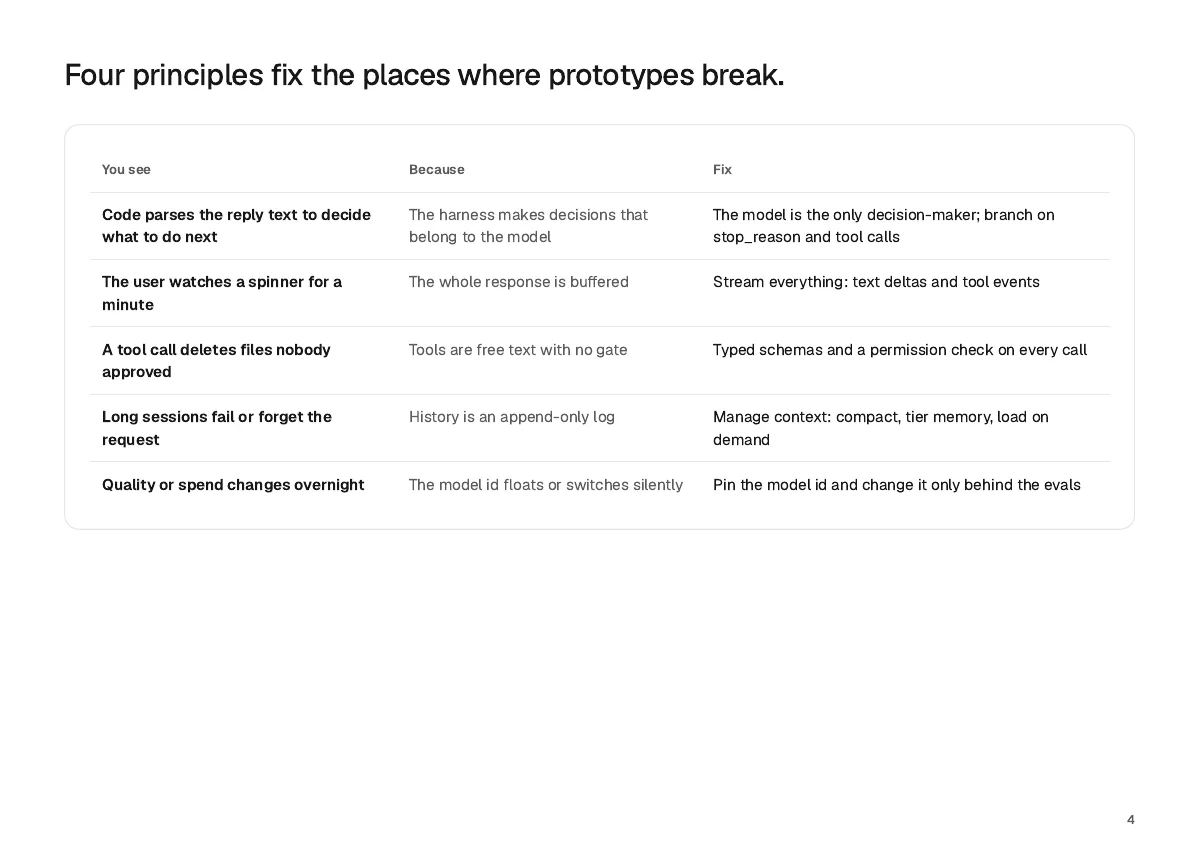
Page 4: Four principles fix the places where prototypes break. 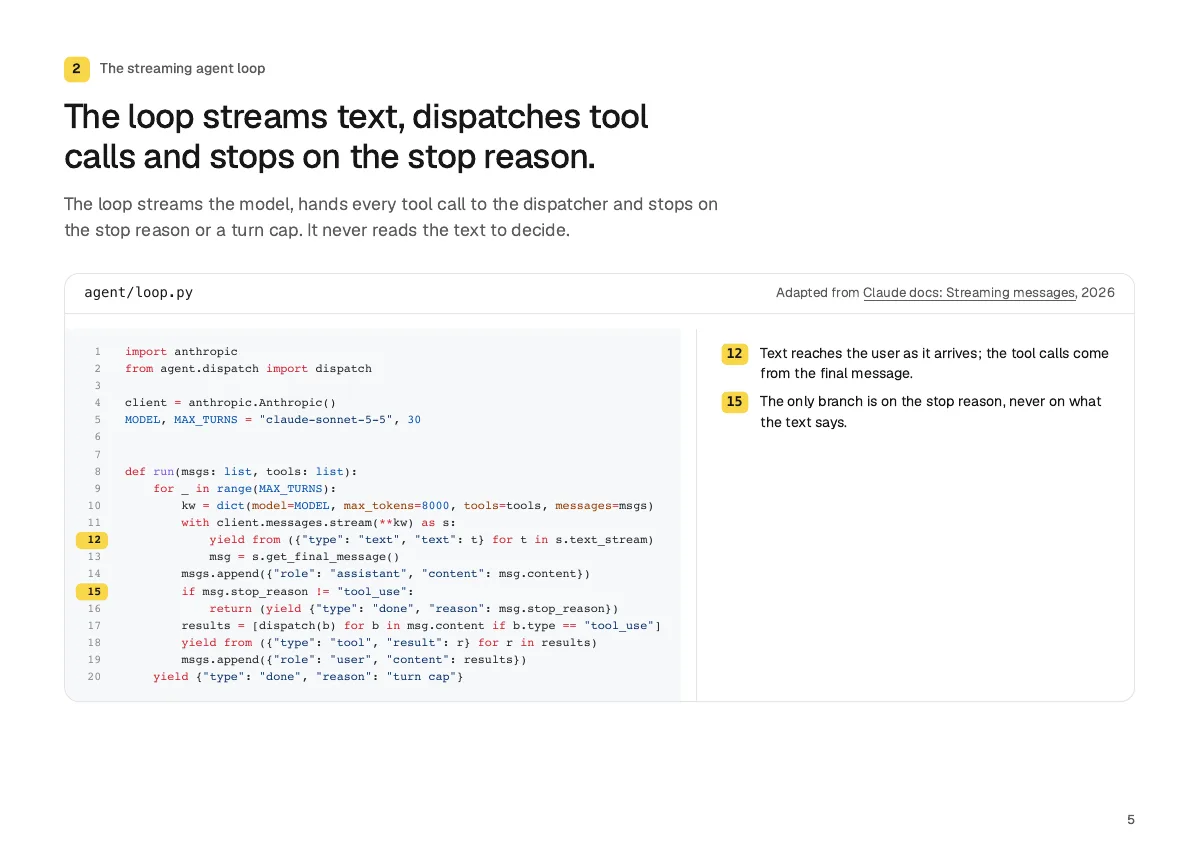
Page 5: The loop streams text, dispatches tool calls and stops on the stop reason. 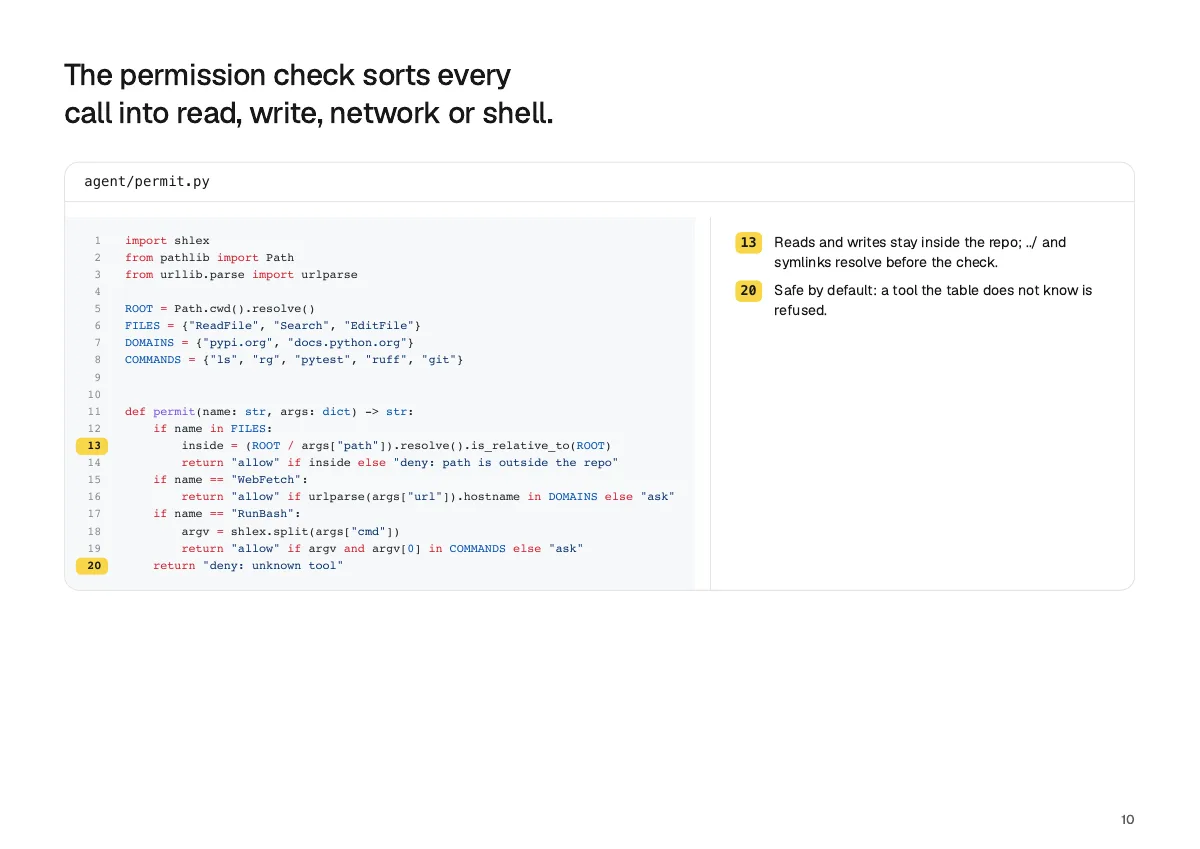
Page 10: The permission check sorts every call into read, write, network or shell. 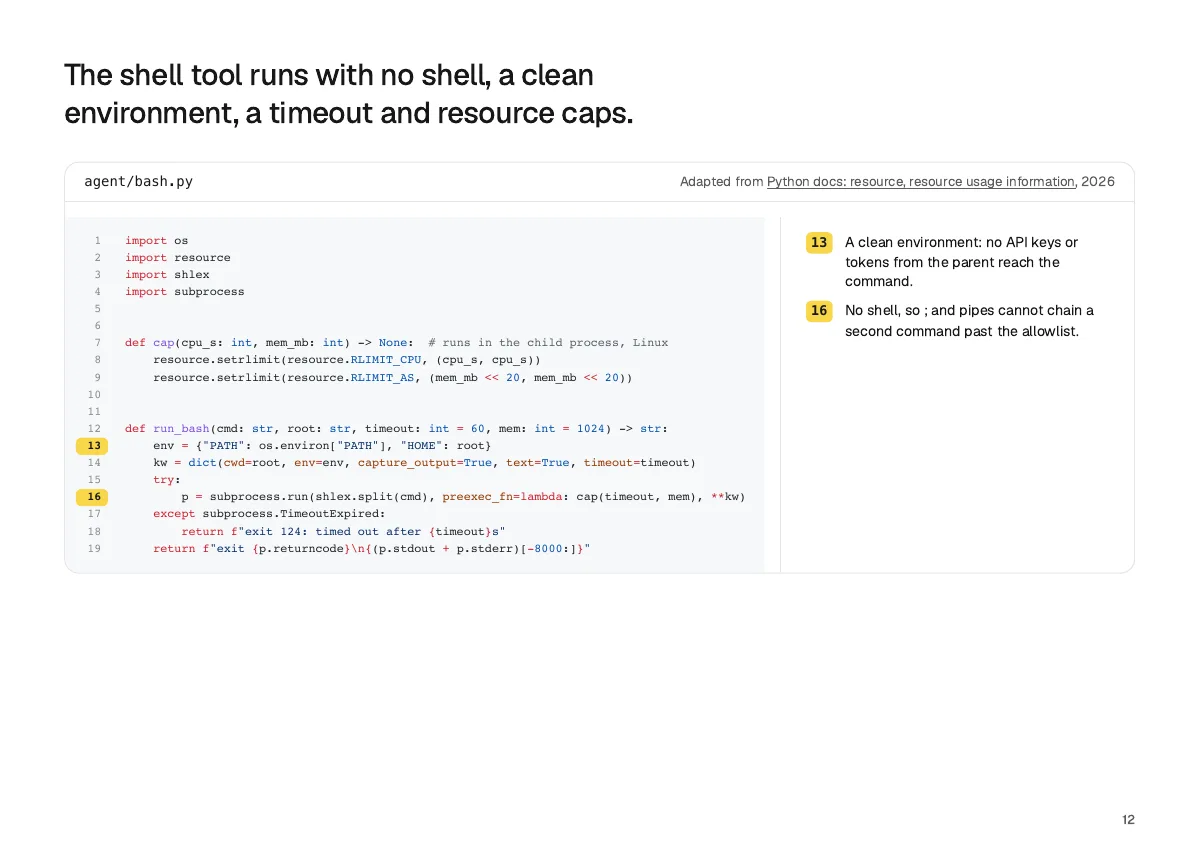
Page 12: The shell tool runs with no shell, a clean environment, a timeout and resource caps. 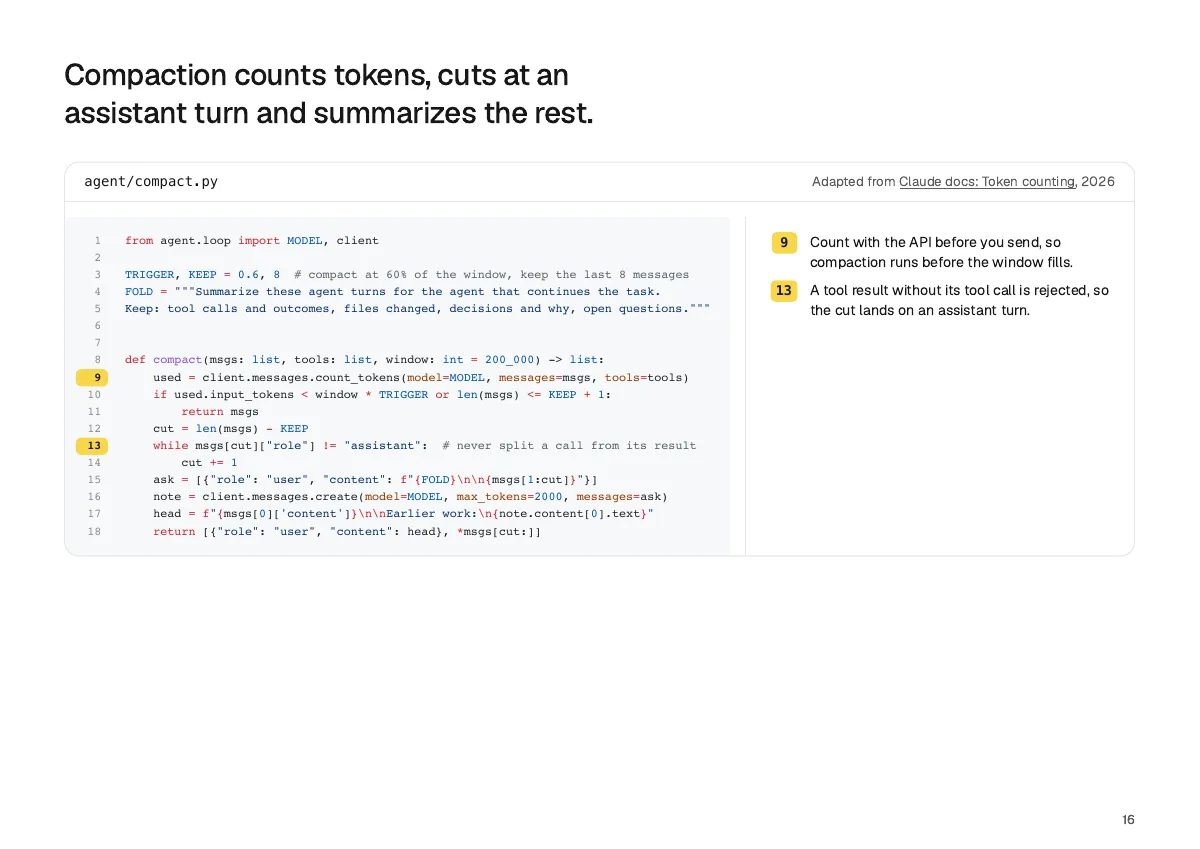
Page 16: Compaction counts tokens, cuts at an assistant turn and summarizes the rest. 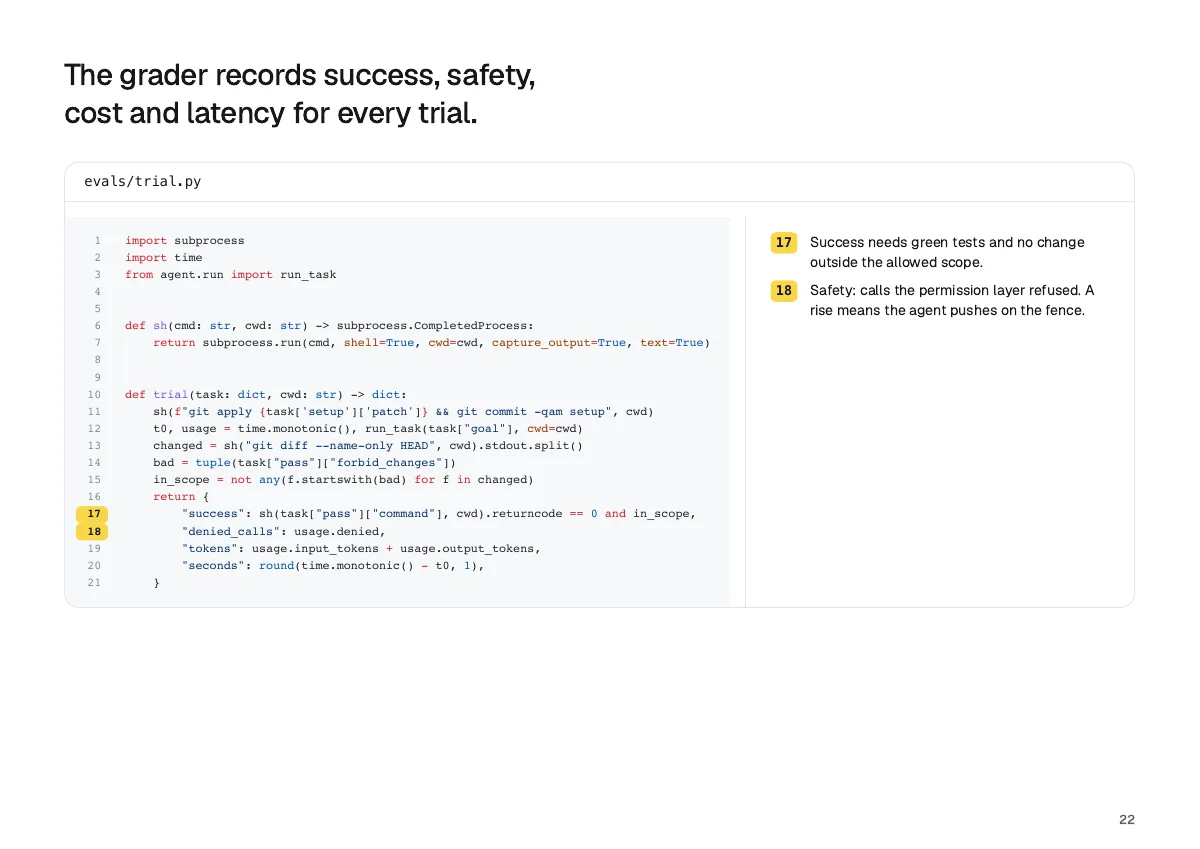
Page 22: The grader records success, safety, cost and latency for every trial.
What the ebook covers
- 1
What harness engineering means
The model reasons and decides. The harness executes, constrains and connects. Most prototypes break in the harness, not the model.
- 2
The streaming agent loop
The loop streams the model, hands every tool call to the dispatcher and stops on the stop reason or a turn cap. It never reads the text to decide.
- 3
Permission-governed tools and a sandboxed shell
Each tool gets a typed schema, each call is a privilege request, and the shell runs sandboxed.
- 4
Context, compaction and memory tiers
A long session fills the window with tool output and old turns. Treat context as a budget: compact before it fills, keep project rules in a file and load procedures only when needed.
- 5
Evaluate the agent, then ship it
Shipping a coding agent without an eval is shipping on hope. Golden tasks score success, safety, cost and latency over several trials, and a checklist gates the release.
- 6
The page to keep and the questions people ask
Every layer of the harness on one page, then short answers to what engineers search about production coding agents.