A free ebook, as a PDF and an EPUB
Systematic debugging: a forensic guide to bugs that come back
Reproduce on a clean checkout, bisect in time and space, instrument instead of guessing, test one hypothesis at a time, and write the post-mortem that kills the whole family of bugs.
The ebook is open in a new tab
If it did not open, open the PDF. For a reading app, download the EPUB. Both links work for a day; the form gives you new ones any time.
Build it live, with an engineer reviewing your choices
Trace AI Agents in Production. Every agent run traced in Langfuse, a dashboard of cost, latency and failures per agent and per customer, and an alert before one goes over budget.
The Lightning recordings on this site are free with an account.
Look insidePages from the PDF, as they print.
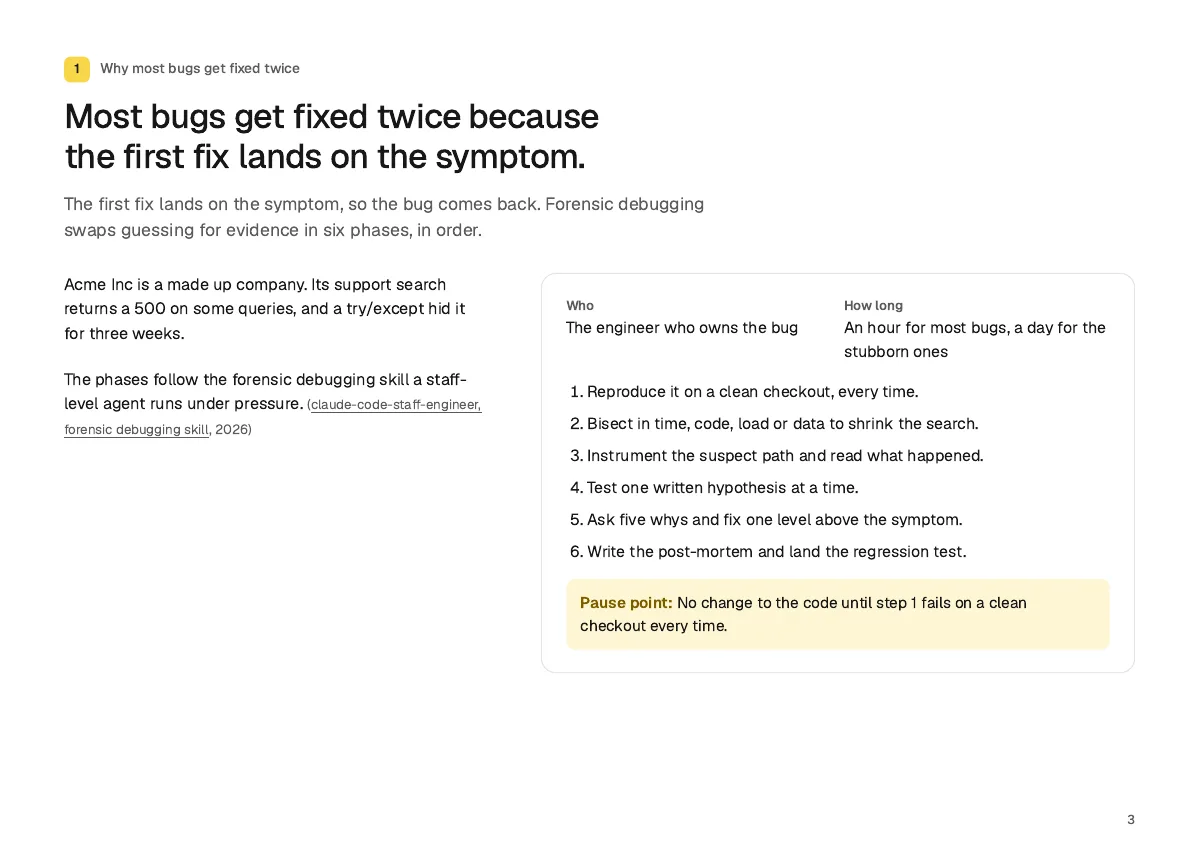
Page 3: Most bugs get fixed twice because the first fix lands on the symptom. 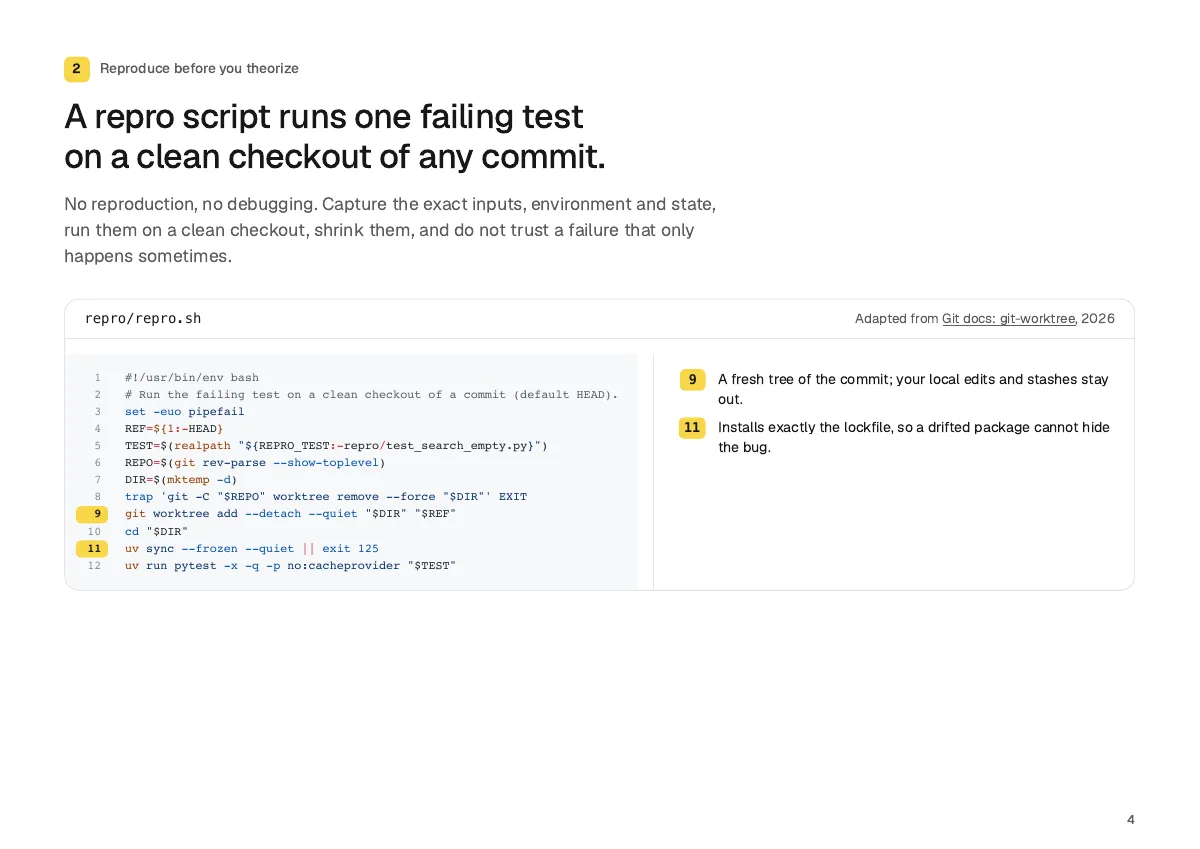
Page 4: A repro script runs one failing test on a clean checkout of any commit. 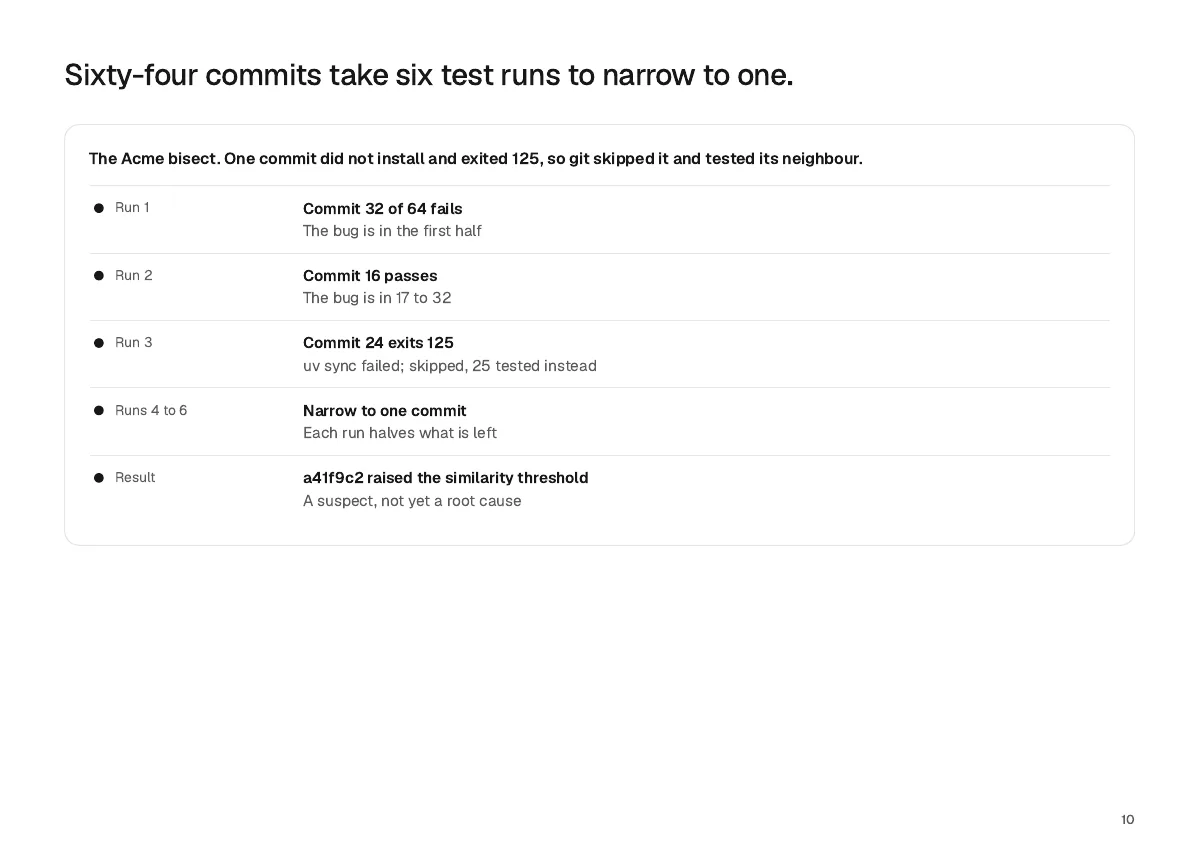
Page 10: Sixty-four commits take six test runs to narrow to one. 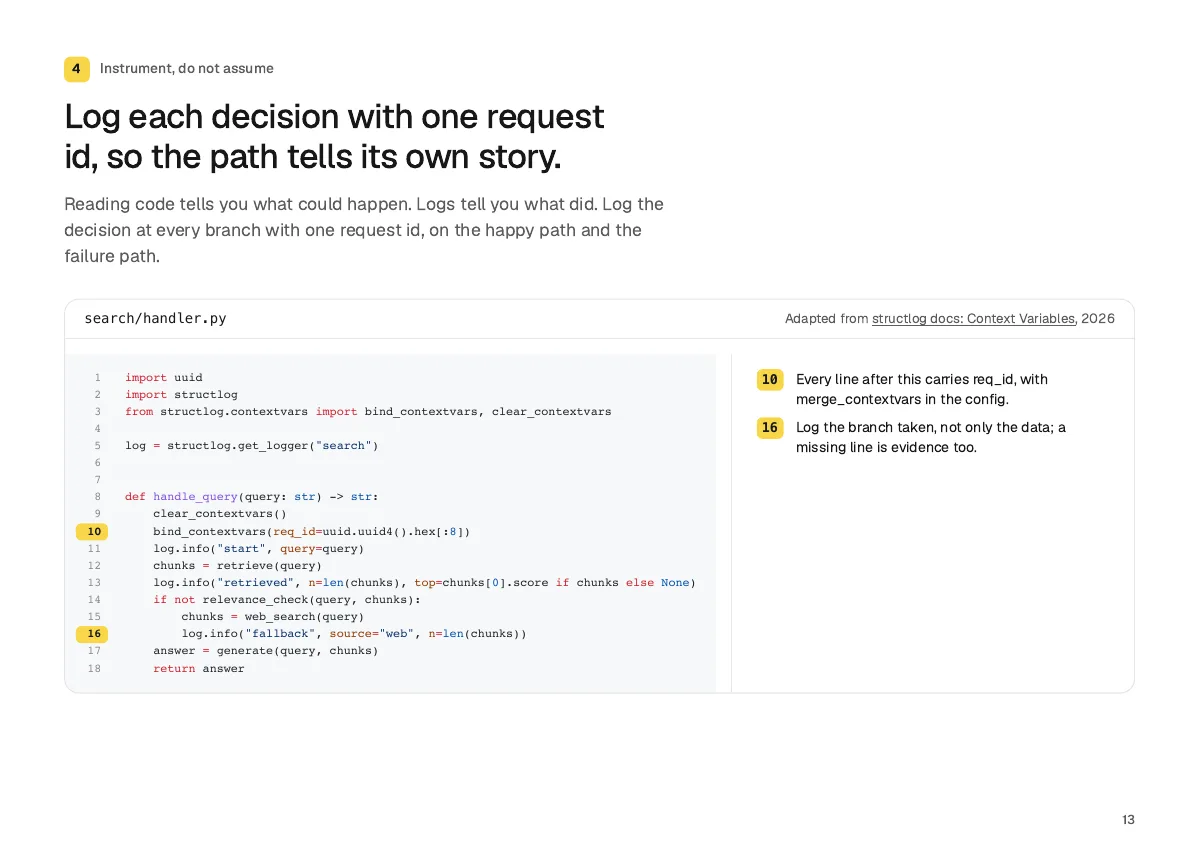
Page 13: Log each decision with one request id, so the path tells its own story. 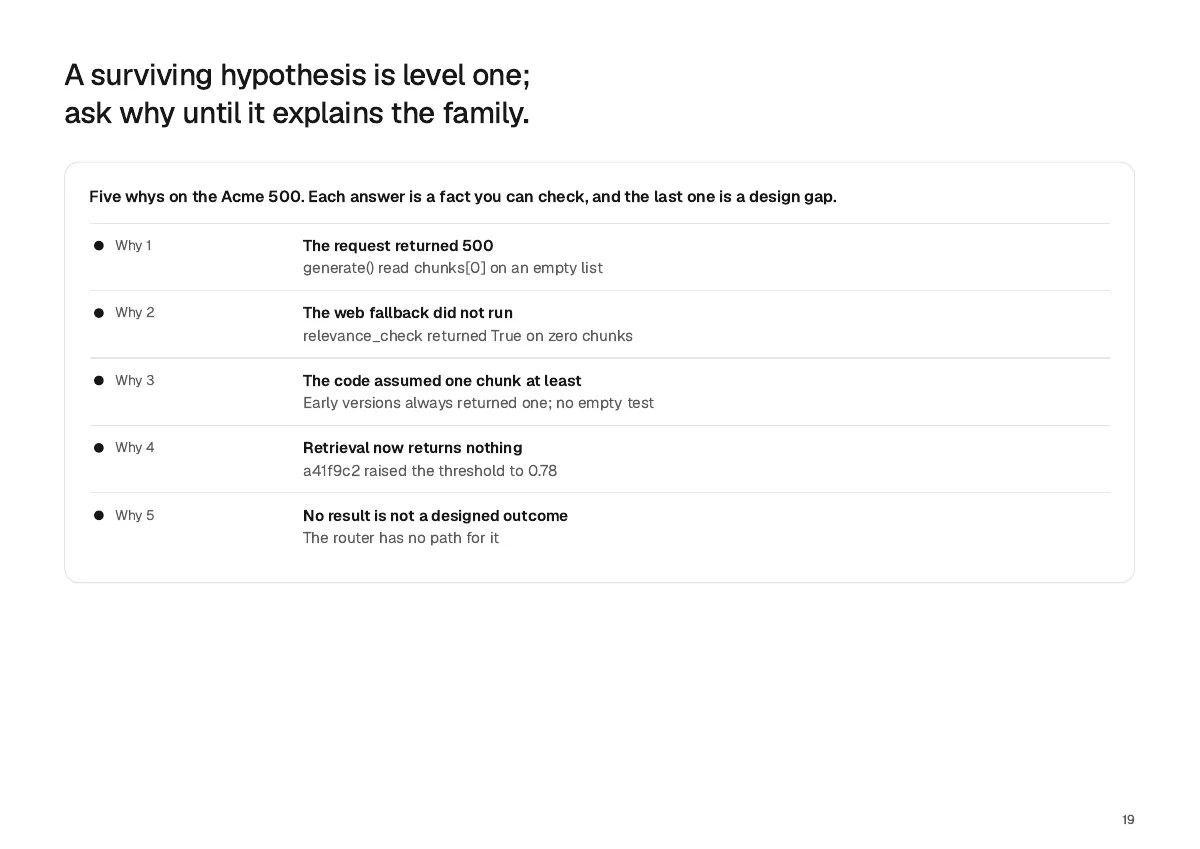
Page 19: A surviving hypothesis is level one; ask why until it explains the family. 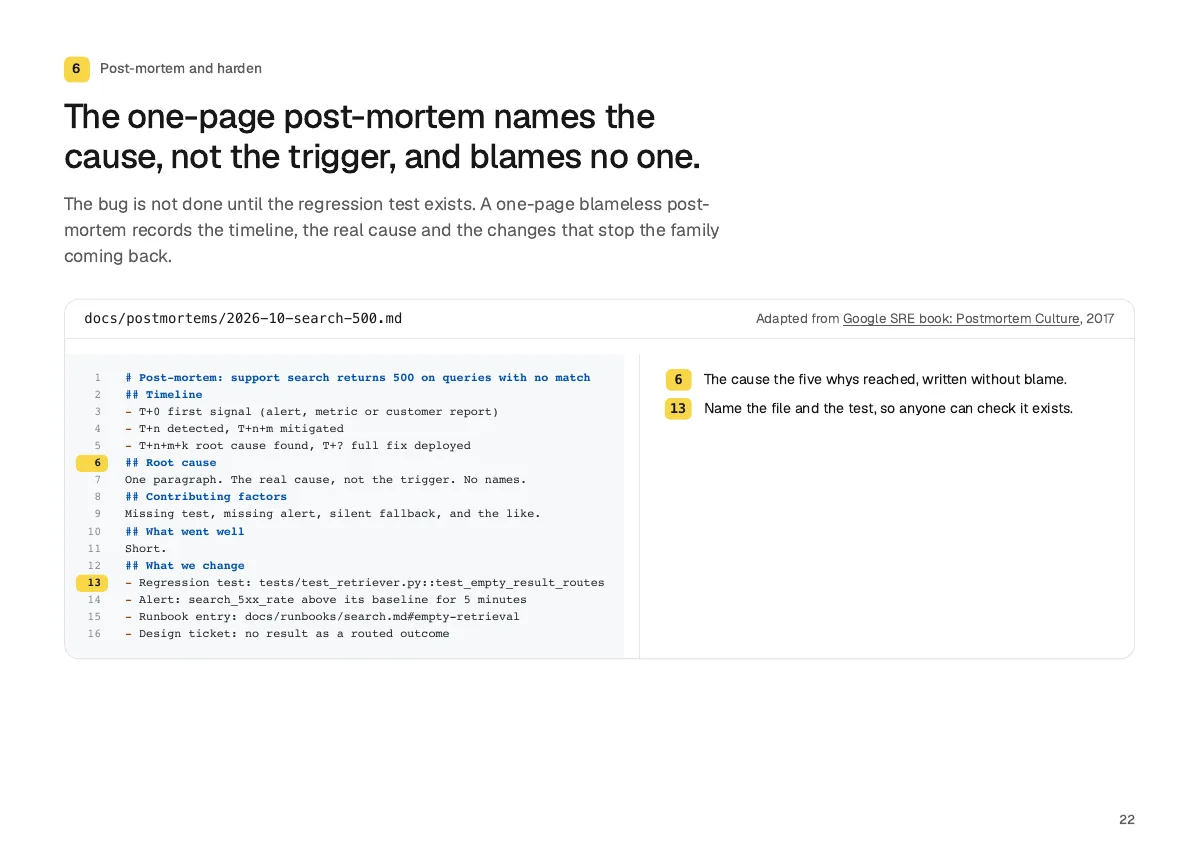
Page 22: The one-page post-mortem names the cause, not the trigger, and blames no one.
What the ebook covers
- 1
Why most bugs get fixed twice
The first fix lands on the symptom, so the bug comes back. Forensic debugging swaps guessing for evidence in six phases, in order.
- 2
Reproduce before you theorize
No reproduction, no debugging. Capture the exact inputs, environment and state, run them on a clean checkout, shrink them, and do not trust a failure that only happens sometimes.
- 3
Bisect in time, code, load and data
Binary search beats reading code in order. Bisect commits when a release broke it, the call graph when one service fails, concurrency when load does, and inputs when one tenant does.
- 4
Instrument, do not assume
Reading code tells you what could happen. Logs tell you what did. Log the decision at every branch with one request id, on the happy path and the failure path.
- 5
Hypothesis loop and five whys to root cause
State one hypothesis in one sentence, run the experiment that could prove it wrong, and update. When one survives, ask why five times and fix at the level you can afford.
- 6
Post-mortem and harden
The bug is not done until the regression test exists. A one-page blameless post-mortem records the timeline, the real cause and the changes that stop the family coming back.
- 7
The page to keep and the questions people ask
Every phase on one page, then short answers to what engineers search about systematic debugging.